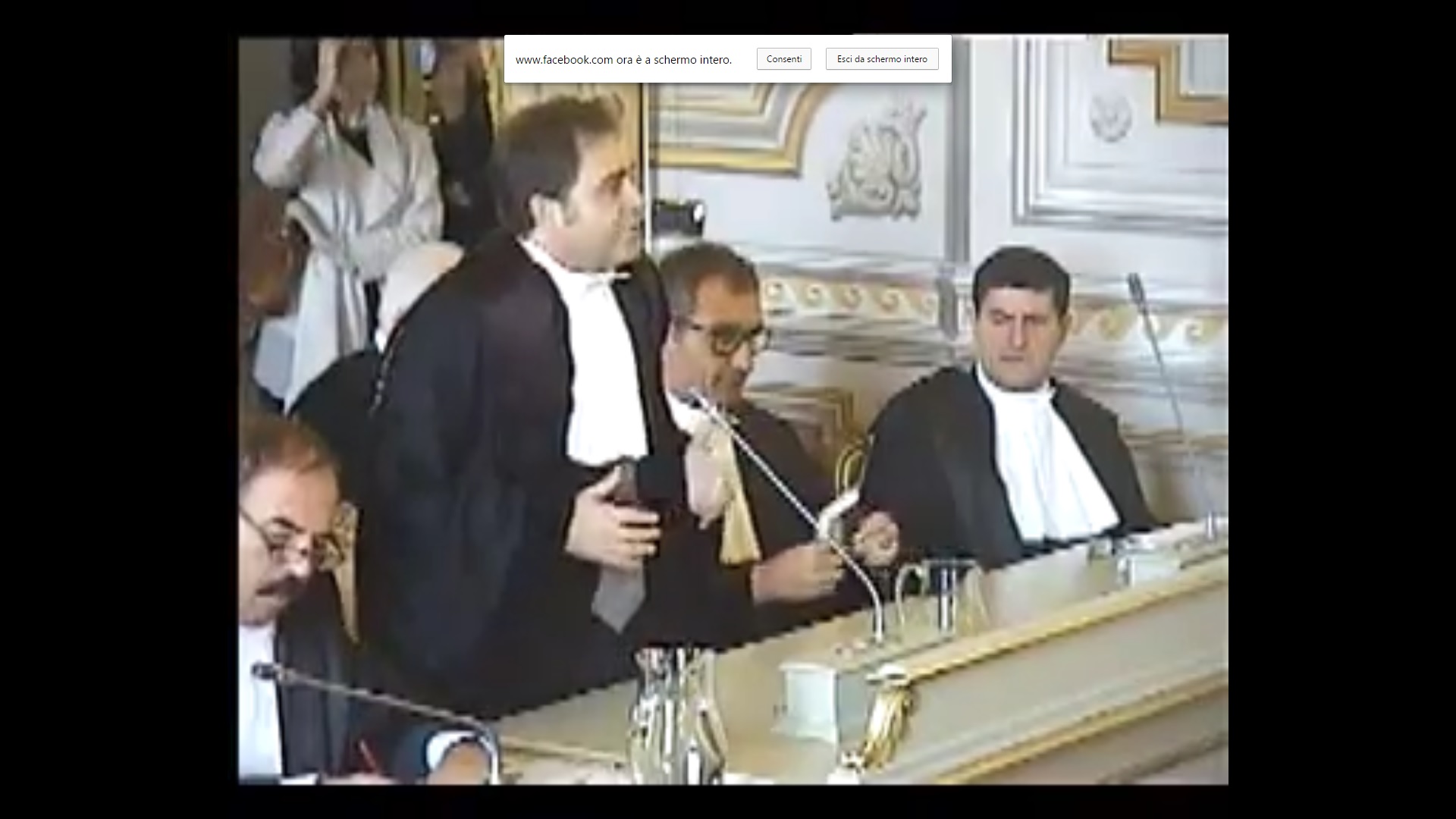
On December 3, the Constitutional Court filed ruling No. 247 of 2015, which addressed the well-known issue of copyright on electronic communications networks and the potential conflicts between the regulatory powers that AGCOM has vested in its own Regulations and the primary provisions that would permit such activities. The Court issued an extremely detailed ruling, with several firm points.
First of all, the Constitutional Court did not reject any appeal, since the Constitutional Court decides on the constitutionality of laws brought to the Court's attention by a judge, in this case the Lazio Regional Administrative Court, and not on appeals from a private party, as if one were before a normal court.
This is clearly a linguistic inappropriateness. which he incurred the Vice President of the Confindustria Cultura Association, one of the Associations that was present before the Constitutional Court, Enzo Mazza.
The Court did not reject or accept the question of constitutionality, but rather declared the referral made by the TAR inadmissible for formal reasons, namely because the TAR Order itself was not clear in requiring the Court to take a precise position on the constitutionality of the provisions.
The question of constitutionality has therefore not been decided, that is, the Court has not examined the merits of the matter referred to it by the TAR, with the consequence, moreover, that it can raise the issue again at any time before any judge.
But why is this ruling crucial to the further development of the Regulation, which AGCOM has now launched completely independently, and without the regulatory backing of the relevant provisions, at least according to the Court's reconstruction?
Because the Constitutional Court has clearly stated that the provisions invoked by the TAR to justify AGCOM's potential regulatory powers in the area of copyright do not grant AGCOM the power to issue a regulation on copyright.
Follow on formiche.net
 English
 Italian